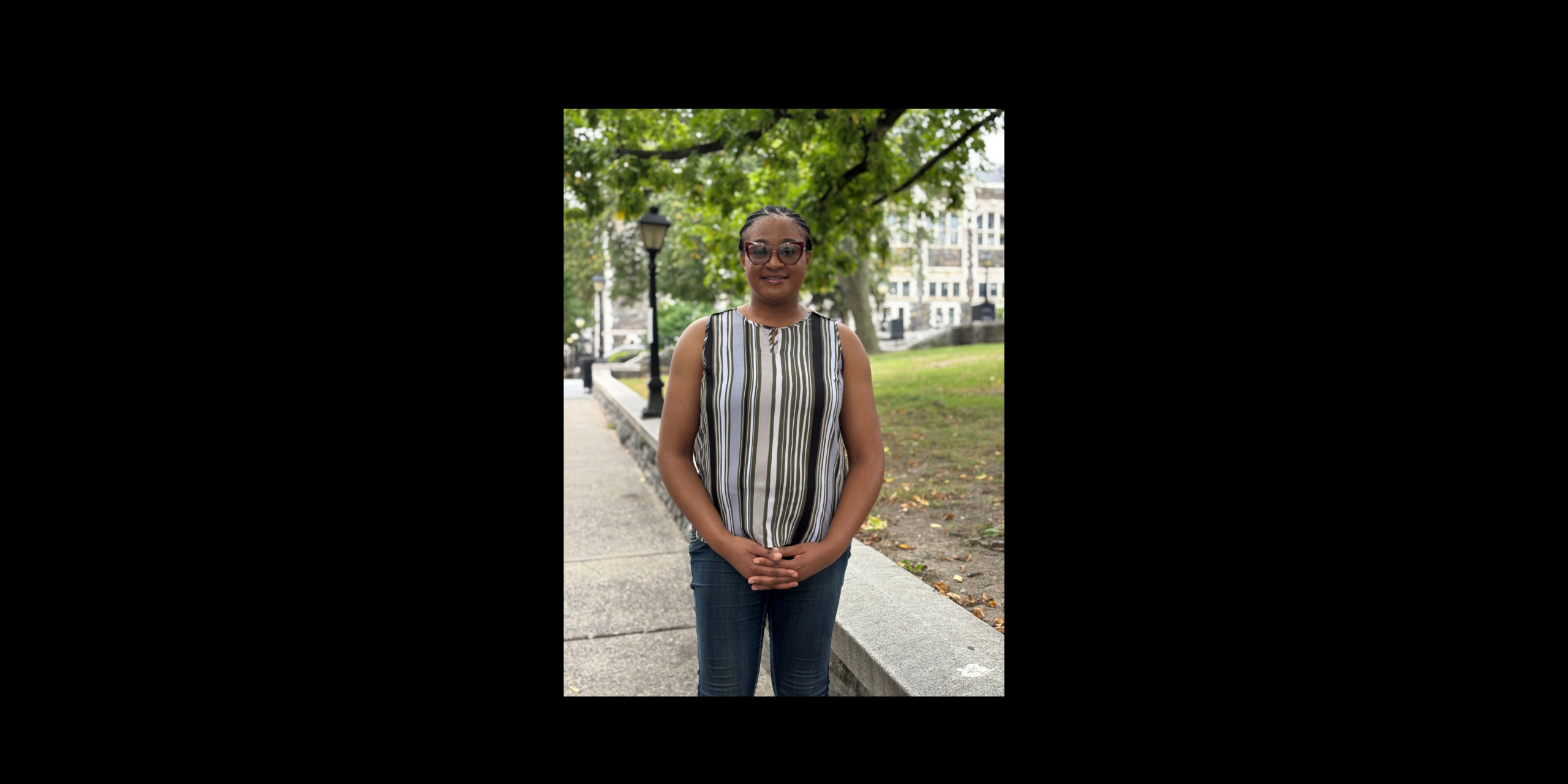
Today’s #StudentSpotlight is Vernaline Udeoha!
What brought you to the City College of New York and to the Colin Powell School for Civic and Global Leadership?
I work as a Procurement Analyst at NYC Parks, and my background is in accounting. When I started looking at MPA programs, I knew I wanted something practical, close to home, and connected to the city I already work in every day. I didn’t want a program that felt disconnected from the real world or from the communities I serve through my job. CCNY and the Colin Powell School stood out to me because they focus on public service and leadership in a way that feels grounded and real. The school’s commitment to civic and global leadership, combined with CCNY’s long history of access and opportunity, made it feel like the right fit. I also liked that the program seemed to understand students who are already working and trying to grow in their careers. Once I talked to a few current students, some alumni, and looked more closely at the curriculum, I could see that my experience would connect to something bigger. It felt like a place where I could build on what I already know while learning how to make a wider impact.
What advice would you give to future or prospective MPA students?
Don’t wait for the perfect time, because there probably isn’t one. I work full-time, so I understand how intimidating it can feel to add school on top of everything else. You don’t have to do it perfectly. Ask questions, talk to your professors, and lean on your classmates. Bring your work experience into the classroom—it makes the material more real and helps you connect theory to practice. Give yourself some grace. You are doing more than you think, and it is okay to take things one step at a time.
What do you enjoy most about being part of the MPA community?
The people. My classmates come from different backgrounds, and everyone brings real experience to the table. Some are already in government, some come from the nonprofit sector, some are involved in community work, and others are making a career change. That mix makes discussions richer because you are not just hearing from a textbook; you are hearing from people who have been in the field. As a working professional, I don’t always have extra time, but when I connect with classmates, it is worth it. People are supportive and honest about the juggle. We share resources, check in on each other, and celebrate wins. It makes the program feel less lonely and more like a community. I also appreciate the faculty. They are accessible and invested in student success. That combination of peers and professors has made the experience more rewarding than I expected.
What inspired you to pursue an MPA?
My background in accounting and my work in city government gave me a strong foundation in budgets, contracts, and how resources move through public systems. Over time, I realized I wanted to understand the bigger picture: why decisions are made, how programs actually serve communities, and how I can contribute beyond the numbers. Working in public service has shown me how much public spaces matter. Parks and green spaces bring people together, support health and well-being, and shape quality of life across neighborhoods. That inspired me to pursue an MPA so I can help shape policy, manage programs, and ensure resources are used in ways that truly benefit people. The MPA is where my analytical skills meet a stronger, more direct role in public service.
What has been your favorite class or professor so far, and why?
It’s hard to choose because all my professors have been wonderful. Each has brought something different, and I have learned a lot from them. If I had to pick one, I would say Professor Janet Kyle, who taught my Human Resources Management course. Her class was one of the most practical I have taken. She approaches HR in a way that makes it clear people are the real engine of any organization. One thing she said has stayed with me: “Motivated people can do a lot without money, but money without people won’t do anything.” That stuck because it is easy in this field to get caught up in budgets, contracts, and numbers. Her class reminded me that the work is ultimately about people and how you support them. What I appreciated most is that she does not just teach theory. She uses real case studies and pushes you to think about what you would have done differently. She treats the classroom like a workplace—organized, engaged, and fair—and expects the same from students. As someone working full-time, that structure and mutual respect made a big difference. It felt less like a class and more like training for the kind of manager and public servant I want to become.
What are your plans or hopes after graduation?
After graduation, I hope to stay in public service, ideally with a city agency, in a role that combines my analytical skills with policy, budget, and program work. My goal is to advance within NYC Civil Service and ultimately serve as a director in a management and administration role. I want to be in a position where I can help ensure resources go where they are needed and that public spaces are accessible to all communities. I want to be part of decisions that improve how services are delivered and make government work better for the people who rely on it. In the future, I hope to take on leadership roles where I can influence policy and program decisions that improve public services for all New Yorkers. I also hope to stay connected to CCNY and the Colin Powell School through alumni events, mentoring, or projects that bring the school and the community together.