

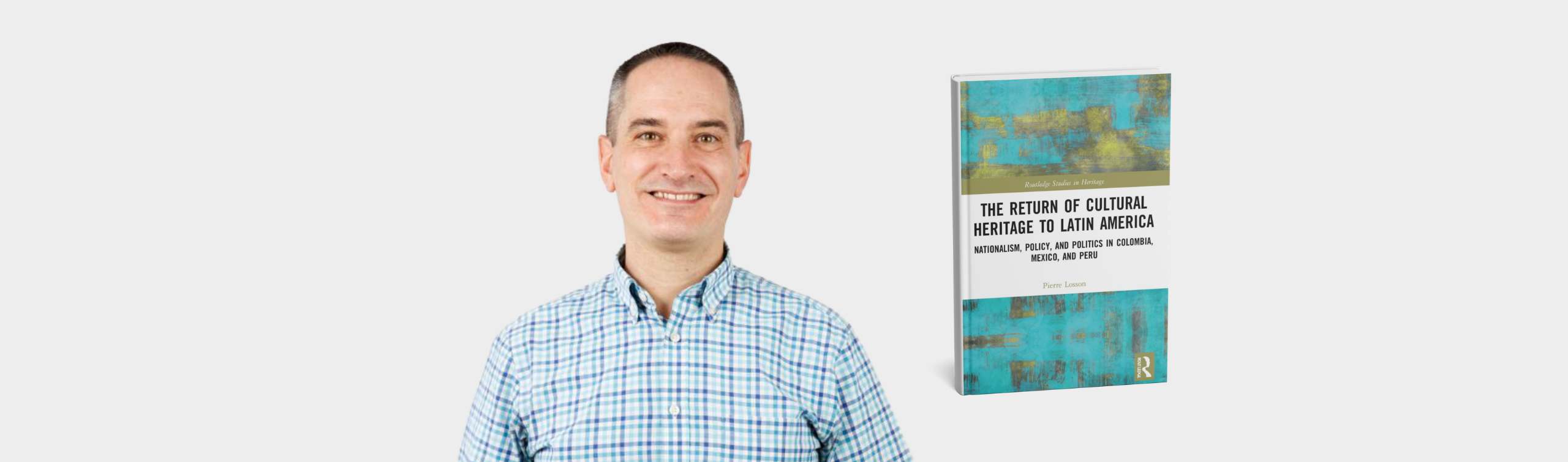
Pierre Losson, Associate Director of the Colin Powell School’s Social Mobility Lab, traveled to Bogotá and São Paulo in November 2025 to present his research on the restitution of cultural heritage to Latin American countries—a subject gaining global urgency as nations of the global South increasingly demand the return of artifacts removed during colonial and post-colonial periods.
Losson, a graduate of The Graduate Center, CUNY’s doctoral program in political science, presented his book The Return of Cultural Heritage to Latin America: Nationalism, Policy, and Politics in Colombia, Mexico, and Peru at two prestigious venues: the National Museum of Colombia’s annual historical conference and a seminar organized by Brazil’s Ministry of Foreign Affairs in São Paulo.
A Global Debate Over Restitution
Communities and countries worldwide are pressing for the return of artworks, anthropological objects, and human remains they consider their heritage—items they argue were illegally or unethically removed decades or centuries ago. The issue touches virtually every nation, yet remains deeply contentious.
Major museums continue to resist restitution, arguing that returning even a few items would set a precedent that could empty their collections. Losson has challenged this claim in previous publications, noting that the scale of museum holdings makes such fears unfounded.
The legal landscape is complex. Some disputes are resolved in court when theft can be proven or when items were removed after the 1970 UNESCO Convention on illicit cultural property came into force. But the thorniest cases involve artifacts taken in colonial or post-colonial contexts, before such legal protections existed. Additional ethical questions arise around repatriating human remains to descendants and helping heirs of Nazi-era victims recover looted artworks.
Reimagining Museums and Artifacts
At the National Museum of Colombia’s conference “Ernesto Restrepo Tirado 2025: Decolonize, Reinterpret, and Reimagine Museums,” Losson addressed a pressing question: What happens to cultural items after they return home following decades or centuries in Western museums?
“What can be the destiny of artifacts that have become objects of study or display for museums? Can they be put to any other social use once they return to their place of origin?” Losson asked, framing questions now debated globally among museum professionals, archaeologists, government officials, and local communities envisioning the decolonization of cultural institutions.
Building International Networks
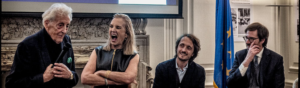
Following his Bogotá presentation, Losson traveled to São Paulo at the invitation of Brazil’s Ministry of Foreign Affairs. Brazil, holding the 2025 BRICS presidency, organized a seminar at the University of São Paulo’s Faculty of Law that brought together officials and experts from South Africa, Indonesia, China, and scholars from North America and Europe to discuss the worldwide momentum toward restitution.
“Being based in one of the main cultural centers of the Global North, participating in these kinds of events allows me to create new relationships with peers in other countries and deepen reflections on all these questions,” Losson said.
Losson’s book is also available in Spanish. He is currently working on a manuscript for an edited volume and hopes to soon teach a course on cultural heritage restitution.