


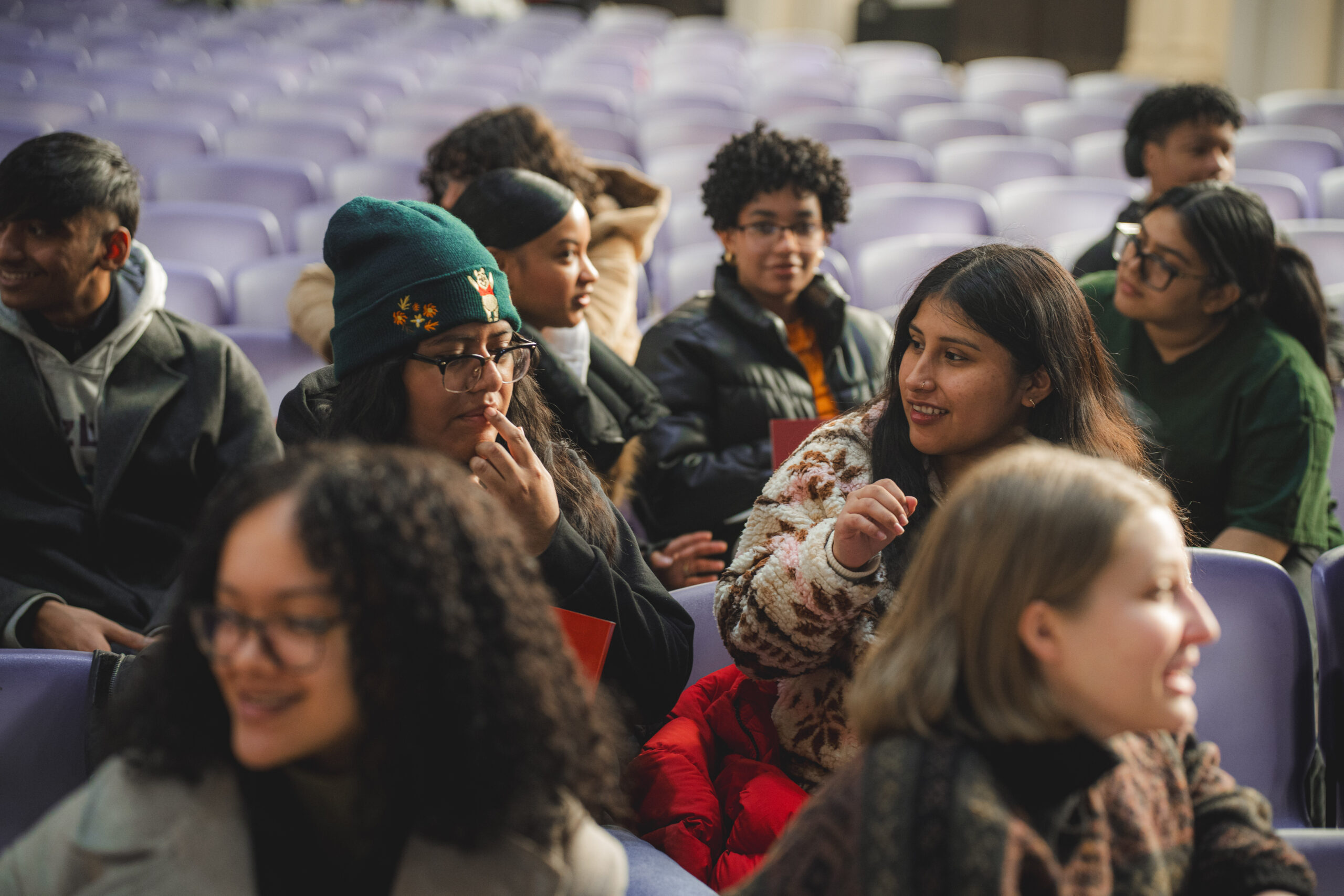

When we think about social mobility and higher education, we think of students navigating classes and coursework. However, research shows that successful students take advantage of everything higher education has to offer. They study diligently, join organizations that align with their interests and aspirations, develop connections with professors and faculty, and embrace new roles that build confidence. Research suggests that, beyond academic engagement, involvement in campus life plays a meaningful role in mobility. Participation in student activities and groups supports integration and academic persistence, while also cultivating the kinds of “sociocultural resources” employers value during the hiring process (Silver, 2020). For college students today, tackling homework and exams is just one part of the equation. Examining extracurricular involvement within the broader social context helps to deepen our understanding of how mobility unfolds, especially across intersections of race, class, and gender.
Colleges include both formal and informal spaces for students to gather and organize (Silver, 2020). Student clubs, research labs, internships, professional development programs, and affinity groups offer opportunities for growth. Accessing them, however, tends to be uneven and largely informed by students’ comfort with negotiating unfamiliar spaces, as well as the broader historical, social, and political climate in which campuses are situated. For example, the middle-class norms that structure higher educational environments can subtly pressure students to conform or assimilate, which may feel particularly compromising for racial and ethnic minority students, working-class students, and women (Roksa & Silver, 2019; Silver, 2020). In the face of uncertainty about how they will be treated, students may choose to avoid involvement altogether, providing insight into how systems of social inequality reproduce themselves.
In the context of higher education, particular styles of engagement, such as assertiveness, self-promotion, competitiveness, and independent achievement, are often rewarded (Goudeau et al., 2024). Students who readily speak up may be seen as especially capable; however, these perceptions are also filtered through expectations around performances of race, gender, and class. In one study of extracurricular student life, a Black woman described how becoming more vocal led others to perceive her as “intimidating,” and other students from less-advantaged backgrounds recalled feeling “shut down” or pushed to the margins when they provided feedback (Silver, 2020). In this way, participation may be rewarded, punished, or otherwise constrained depending on one’s social position or identity.
Meanwhile, students who contribute more quietly or approach new spaces cautiously may be less visible, even when deeply engaged. Some students lean on trusted peers to guide them and interpret unwritten expectations, while others may gravitate toward identity-based organizations that feel more welcoming. While these spaces are essential, research on economic connectedness also highlights the importance of broad, cross-cultural networks in expanding opportunity (Chetty et al., 2022).
For first-generation and working-class students, extracurricular involvement may come with an additional layer of complexity. Strong connections to family and home communities typically remain central throughout college, and these students are more likely to rely on personal, rather than institutional, resources, which may limit the accumulation of social and cultural capital that higher education tends to reward (Roksa & Silver, 2019). This tension raises important questions about loyalty, belonging, privilege, and self-continuity (Silver, 2020). If pursuing certain opportunities conflicts with existing values or responsibilities, students may hesitate or struggle to do so, requiring additional emotional labor that remains largely unseen.
At public institutions like City College, where many students must balance academics with employment, family responsibilities, and long commutes, time itself is a scarce resource. Evening meetings, unpaid internships, volunteer work, and leadership commitments may be easier to sustain for students whose financial and caregiving responsibilities are lighter. For example, students who care for older family members often report emotional stress and disruptions to their academic progress, while also feeling motivated by cultural traditions that provide meaning and purpose. Despite the challenges, caregiving can deepen family relationships and even inspire future career goals in related fields (Lun, 2022). When we consider extracurricular involvement as a core dimension of mobility, examining how these spaces are structured through an intersectional lens is critical. Who is rewarded for speaking up in meetings? Whose personal commitments are understood and accommodated? Whose participation styles are affirmed?
Social mobility is often imagined as upward movement achieved through determination and hard work, but a closer look at extracurricular involvement reminds us that successful participation does not occur in a vacuum. When colleges recognize family and community ties as strengths and prioritize cooperation over competition, students may be more comfortable integrating themselves into campus life (Goudeau et al., 2024; Roksa & Silver, 2019; Silver, 2020). By openly acknowledging the sociocultural forces that shape academic contexts, higher education can take tangible steps to expand rather than narrow a student’s self-concept. Future research designed to develop tailored interventions that support education and career success across the full spectrum of diverse student communities has the potential to make higher education more culturally responsive and, in doing so, make the promise of mobility more inclusive and equitable.

This article is part of The Social Mobility Lab’s Ideas for Moving Up initiative: a year-long campaign to empower others with research findings that too often have remained in academic journals and behind paywalls, never making it to those who could use it the most. Belonging is the first of five themes we will be addressing. Each week, we’ll be highlighting specific pieces of research listed above on Instagram and LinkedIn. We hope you follow us to find more Ideas for Moving Up.